%20(39)-1.png)
Retention is the engine of a profitable business. For years, the mantra has been repeated, and backed by clear economics:
- Retention is more valuable than acquisition: it can cost five times more to acquire a new customer than to retain an existing one. At Financial Times, the retention vs acquisition effort ratio is 1:15
- Retention has a greater impact: a mere 5% increase in customer retention can increase revenue by 25-95%
- Retention leads to higher Customer Lifetime Value: A retained subscriber continues to generate revenue for months or years
But true retention is a relationship.
It requires trust, and sometimes, a graceful exit. With new regulations like the UK’s Digital Markets, Competition and Consumers Bill (DMCC) mandating a “single communication” cancellation process, publishers are being forced to accept the ‘easy out.’ But despite concerns, this shift presents an unprecedented opportunity: making cancellation smooth not only boosts potential win-back rates by maintaining that long-developed relationship, but turns ex-subscribers into future opportunities and reinforces the trust that underpins long-term growth.
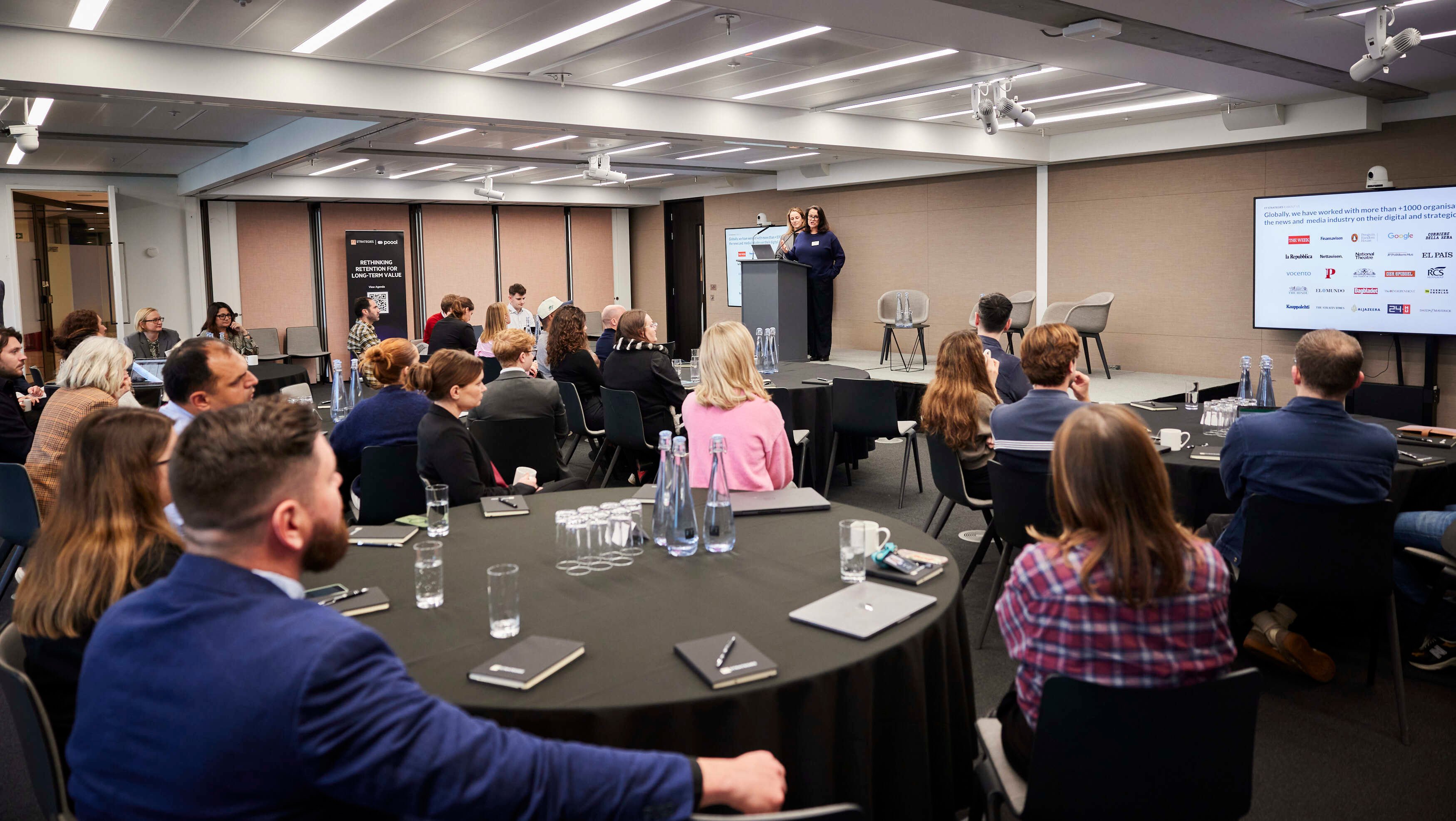
To support publishers in exploring the latest retention trends and practical methods to proactively reduce churn, FT Strategies and Poool ran a workshop in London for those working directly on the topic. After hearing from Germany’s FAZ and the UK’s Financial Times on how they’ve been tackling retention, the group was led through a cancellation journey workshop by The Telegraph with the goal of putting audiences first while abiding by upcoming unsubscription regulations.
Personalisation and retention-first at FAZ
Beatrix Meng, Head of Engagement, and Annemarie Sowa, Senior Digital Marketing Manager, at German newspaper Frankfurter Allgemeine Zeitung are thinking about retention, with reorganised teams and personalisation.
Make retention a priority amongst teams
At FAZ, digital engagement and retention are one and the same team, making it a high priority.
.png?width=1600&height=892&name=unnamed%20(42).png)
The leading teams reverse the traditional marketing funnel to consider retention first and foremost, starting with their most valuable audiences, understanding how they engage, before using this information to acquire and convert more of these high-retained customers.
If you’ve got the data, use it!
The onboarding journey is a key moment in a retention strategy, but personalisation can take an already essential step to the next level.
Given that the FAZ team already collected data on the last article read before converting, they decided to put this information to use in personalising the content recommendations according to the topic of this final article.
This small change alone increased month-on-month retention by 4% amongst readers interested in politics.
.png?width=1600&height=897&name=unnamed%20(43).png)
Retention is a lifecycle goal at Financial Times
At Financial Times, retention is a customer life-cycle goal, split into pre-purchase, activation, in-life, pre-renewal and renewal. Marie Goddard, Director, Customer Experience and Loyalty Marketing, shared lessons from FT on proven tactics throughout this journey.
Retention is a shared goal; make it a shared OKR
.png?width=1600&height=898&name=unnamed%20(44).png)
An engagement-first approach remains vital for driving subscriber retention:
- Promote the behaviours that help customers get maximum value early (On average, 34% of churn occurs within the first 90 days of subscribing, so the first moments and weeks of subscription are vital)
- Tailor content to demographic and behavioural needs
- Introduce breadth of coverage, expertise & experts
- Educate on benefits associated with subscription, “how to guides”, tools and features
- Multi-channel approach to engage in a variety of ways
.png?width=1600&height=895&name=unnamed%20(45).png)
Segmentation and tailored, personalised experiences will have an impact on engagement and retention:
- Personalised retention experiences, such as year-in-reviews, led to a 74.40% retention rate whilst non-personalised lay at 68.90%
- Use data science to segment and tailor experiences, such as targeting around the engagement journey
.png?width=1600&height=897&name=unnamed%20(46).png)
But changing regulations still means cancellation needs to be simple and possible online
The Telegraph led us through a cancellation workshop, used in-house to reimagine cancellation without requiring audiences to go through the call centre.
Previously, 60% of digital subscribers cancelled through the online journey, the rest by contacting the call centre. But this needed to change due to the upcoming Digital Markets, Competition and Consumers Bill (DMCC) that requires British publishers to cancel online and end the contract in a ‘single communication’ with only steps that are reasonably necessary.
.png?width=1426&height=798&name=unnamed%20(47).png)
.png?width=1432&height=800&name=unnamed%20(48).png) To reimagine this journey, teams were first inspired by what competitors were doing, before being assigned a persona, each with their own reasons for cancelling.
To reimagine this journey, teams were first inspired by what competitors were doing, before being assigned a persona, each with their own reasons for cancelling..png?width=1428&height=802&name=unnamed%20(49).png)
The first task, make the journey worse! The more imaginative the better!
Why? By making the journey worse, participants are encouraged to consider the user’s point of view - their context, the frustrations and jobs-to-be-done.
Some of the ideas from the group:
- Bad UX, such as hidden buttons, unclear copy, too many options, lots of steps or unlimited scroll
- A delayed and high-effort process, such as having a 30-day notice period, having to cancel by post or by phoning a call centre with a long waiting time
- Incorrect personalisation for long-term cancellation users that suggest they’re not valued as a customer
- Unhelpful customer service or AI chat bots that take you around in circles
- Lack of response to the user’s reason for cancelling, for instance for those cancelling before a price rise, we could make it worse by increasing the price further
Next, the task was to solve these ‘bad ideas’ with a solution that puts the customer at the centre.
Some of the unique ideas put forward by attendees included:
- Building an adapted subscription offer around the content and features consumed
- Sharing what their money has contributed towards and why that is important
- Allow for pausing
- Offer options (some might prefer to call)
- Or a single click cancellation!
Finally, teams worked through a crazy 8s brainstorming session to design the ideal cancellation experience for each persona.
For The Telegraph, this has led to a new and improved, DMCC-compliant journey that’s continuously being tested and optimised.
- Addition of a progress bar as a visual representation of progress
- Simplification of redundant text ("Share your feedback") & feedback form reduced to 5 options
- Larger title for clarity
- "Keep my subscription" link placed above "Continue to cancel"
- Removal of call centre number (resources such as call centres should be reserved for the more loyal subscribers)
.png?width=1600&height=897&name=unnamed%20(50).png)
The new regulatory environment is forcing publishers to align churn prevention tactics with core customer values. By reducing friction and investing heavily in a robust onboarding and retention-first lifecycle, publishers are not just complying with the law—they are building a more profitable, resilient, and trustworthy business model where a graceful exit is simply another path to future conversion.
Looking to build reader engagement and convert it into sustainable revenue? FT Strategies works with organisations to shape, test and scale subscription strategies that deliver measurable impact across acquisition, engagement and retention. Powered by data and real-world expertise, we help you build models that keep audiences coming back. To enhance on-site engagement, Poool provides dynamic tools that boost conversions at every stage of the reader journey.
%20(34)-1.png?width=768&name=Hero%20Image%20(website%20banner)%20(34)-1.png)
%20(36).png?width=768&name=Hero%20Image%20(website%20banner)%20(36).png)